Managing health after 40 doesn’t have to mean extreme diets, intense workouts, or daily medication.
I’m 52 now, and I want to be honest with you.
When I hit my mid-forties, my body started sending me messages I couldn’t ignore anymore.
Mornings felt stiffer. Stairs felt steeper. My pants felt tighter around the waist.
My doctor suggested medication.
Friends pushed supplements.
Social media showed me people half my age doing impossible workouts.
Everyone had an answer — but none of them felt like my answer.
So instead of chasing extremes, I focused on simple changes that actually fit real life after 40.
The Truth About Extreme Diets After 40
I’ve tried most of the popular diets — keto, intermittent fasting, juice cleanses, and even that strange cabbage soup phase.
They all worked the same way:
- Quick results
- Constant hunger
- Zero sustainability
Here’s what most people don’t realize:
After 40, protecting muscle is more important than losing weight fast.
Extreme diets don’t just burn fat — they burn muscle.
Less muscle means a slower metabolism, weaker joints, and faster aging.
What finally worked for me was embarrassingly simple.
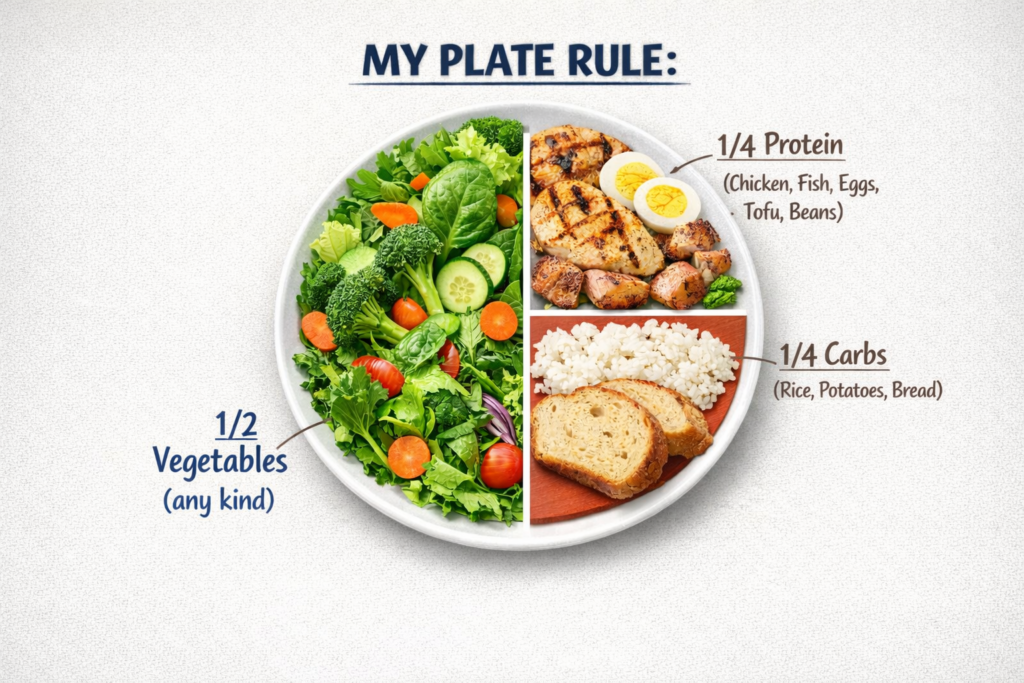
My plate rule:
- Half vegetables (any kind)
- One quarter protein (chicken, fish, eggs, tofu, beans)
- One quarter carbs (rice, potatoes, bread)
No calorie counting.
No forbidden foods.
I lost about 12 pounds over a year — and kept it off — because it never felt like a diet.
Managing Health After 40 Before Medication Becomes Necessary
When my blood pressure came back slightly high, my doctor suggested something refreshing:
“Let’s try lifestyle changes first.”
So I actually tried.
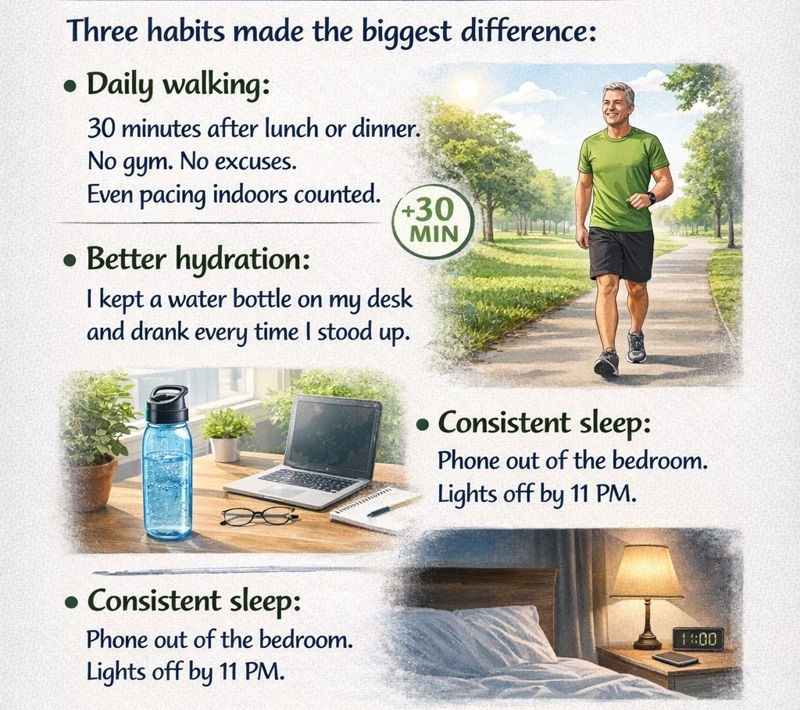
Three habits made the biggest difference:
- Daily walking:
30 minutes after lunch or dinner. No gym. No excuses.
Even pacing indoors counted. - Better hydration:
I kept a water bottle on my desk and drank every time I stood up. - Consistent sleep:
Phone out of the bedroom. Lights off by 11 PM.
Three months later, my numbers were back in the normal range.
No pills.
No complicated program.
Just consistency.
The Only Three Health Habits Adults Over 40 Actually Need

You don’t need 17 morning rituals or two-hour workouts.
These are the only three habits I consistently stick to.
1. Strength Training Twice a Week
Muscle loss accelerates after 40 — and strength training is the only real defense.
My routine takes about 20 minutes at home:
- Squats
- Push-ups (knees are fine)
- Plank
- Lifting something heavy overhead
Twice a week is enough.
2. Walk After Dinner
Even 15 minutes helps regulate blood sugar and digestion.
It also improves sleep quality.
3. Sleep at Least 7 Hours
Without sleep, everything falls apart — hunger, focus, motivation.
The biggest upgrade?
No phone in the bedroom.
Consistency Beats Perfection After 40
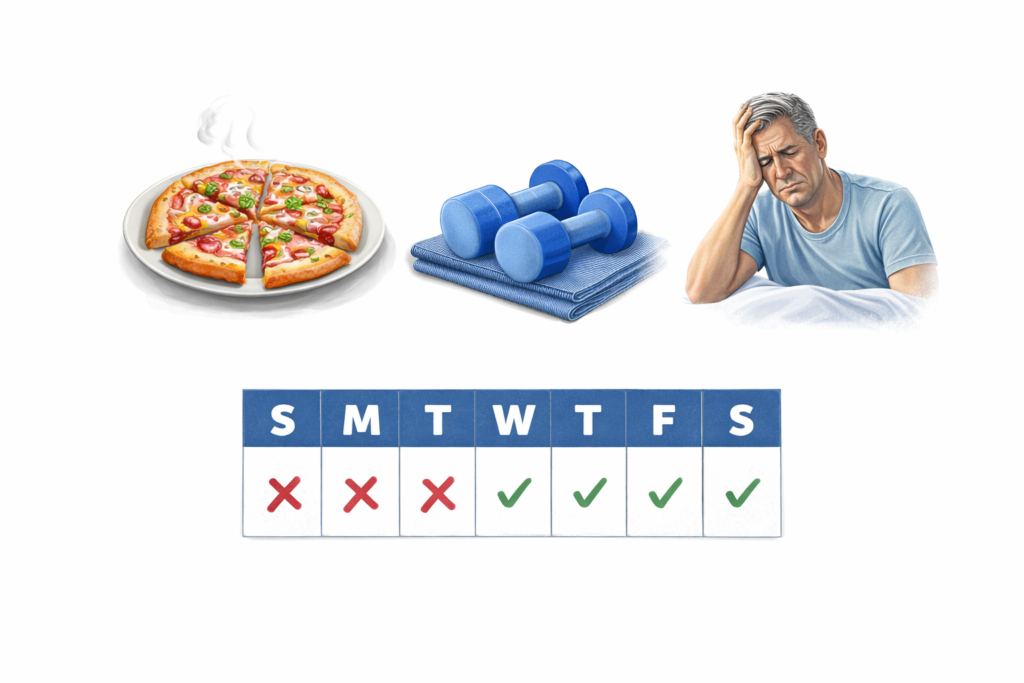
I still eat pizza.
I still skip workouts sometimes.
Some mornings I wake up tired anyway.
And that’s fine.
This isn’t about being perfect — it’s about being consistent most of the time.
If you show up five days out of seven, you’re winning.
What Actually Changed for Me
After six months of these habits:
- I stopped crashing in the afternoon
- My clothes fit better
- Stairs stopped feeling like punishment
- My focus at work improved
- Daily walks became something I looked forward to
Nothing dramatic — just steady improvement.
That’s what real health management after 40 looks like.
The Real Goal of Managing Health After 40
This isn’t about trying to feel 25 again.
The real goal is this:
- Staying independent
- Moving without pain
- Traveling without exhaustion
- Living without constant medical intervention
You get there through small, repeatable habits — not extreme solutions.
Start With One Simple Change
If this feels overwhelming, don’t do everything.
Pick one:
- Walk after dinner
- Drink more water
- Go to bed 30 minutes earlier
Make it automatic.
Then add the next habit.
That’s how this actually works.
This article is based on personal experience and is for informational purposes only.
It is not medical advice. Always consult a qualified professional for medical concerns.
9 thoughts on “How to Manage Your Health After 40 Without Extreme Diets or Medication”